I remember sitting in a conference hall in late 2022, listening to a speaker predict that within five years, AI would be able to generate feature-length films from text prompts, diagnose diseases more accurately than specialists, and write code that passed professional certification exams. At the time, those claims sounded like the kind of speculative hype that technology conferences are famous for. Looking back now, most of those predictions arrived faster than anyone expected. Some even underestimated what was coming.
The pace of AI development does not feel like gradual progress anymore. It feels like acceleration. Each year brings capabilities that would have seemed impossible the year before. For professionals, business leaders, and everyday citizens, keeping up with these trends is not just intellectually interesting. It is practically necessary. The decisions you make about AI today, which tools to adopt, which skills to develop, which policies to support, will shape your opportunities and challenges for years to come.
This article explores the major AI trends defining the present and the forces likely to shape the future. We will examine technological developments, market dynamics, societal impacts, and the practical implications for individuals and organizations. My goal is not to predict the future with certainty, which is impossible, but to help you think about it clearly and prepare for it intelligently.
Why Understanding AI Trends Matters More Than Ever
Artificial intelligence has moved from the margins to the center of economic, political, and social life. It influences hiring decisions, medical diagnoses, financial markets, creative industries, and national security. The trends driving AI forward are not abstract technical developments. They are forces that reshape livelihoods, communities, and power structures.
I learned this personally when a client in the publishing industry asked me to help them understand how AI might affect their business model. We spent months analyzing trends, and the conclusions were sobering. The tools that could generate readable articles were already good enough to disrupt content workflows. The question was not whether change would come, but how quickly and how deeply. That experience taught me that understanding trends early provides the time and perspective to adapt thoughtfully rather than react desperately.
The cost of ignoring AI trends is rising. Professionals who dismissed generative AI as a passing fad in 2023 found themselves scrambling to catch up in 2024. Companies that delayed adoption discovered their competitors had gained insurmountable advantages. Governments that moved slowly on regulation faced crises that could have been prevented with foresight.
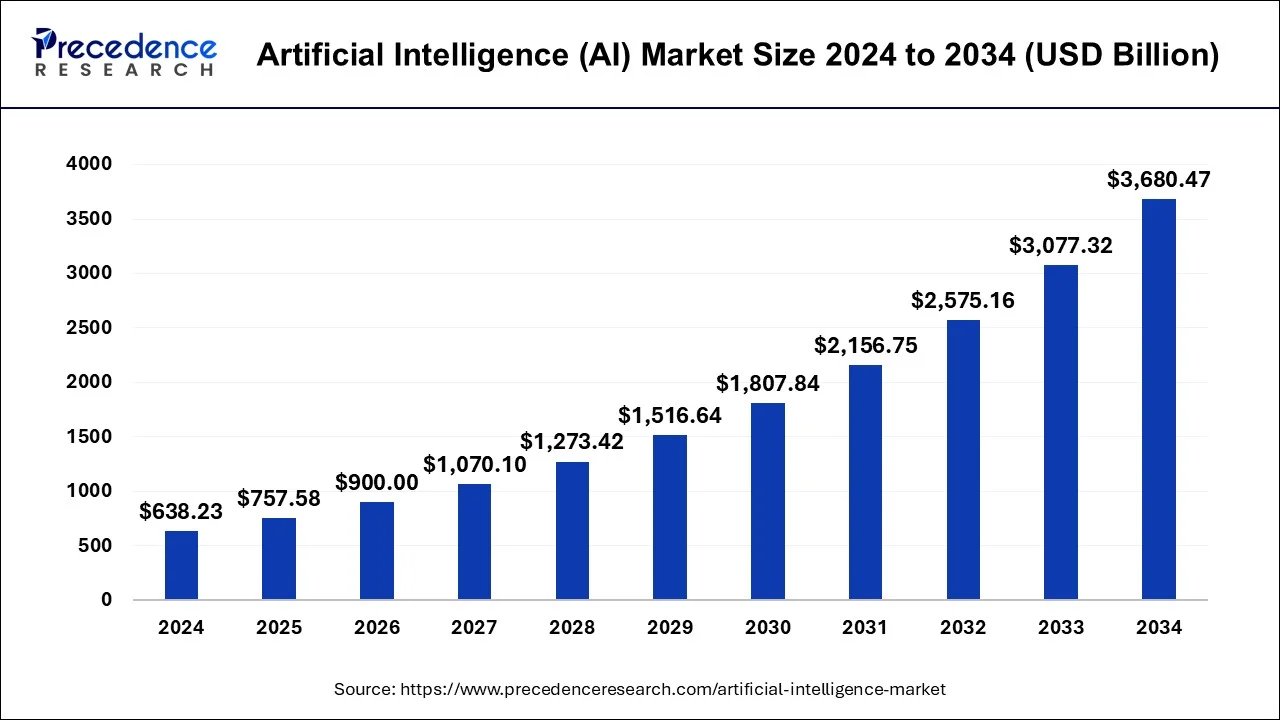
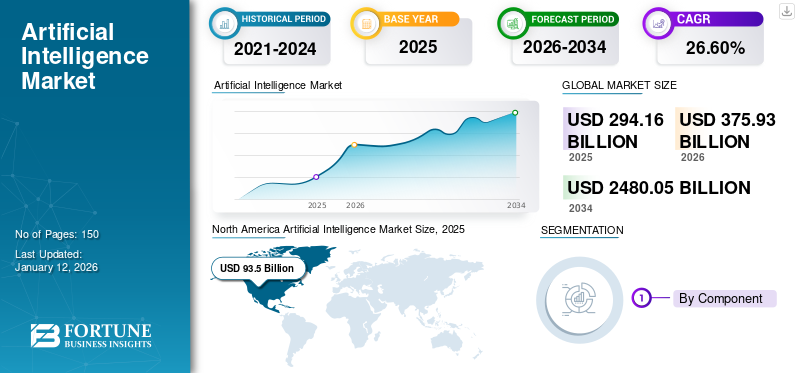
The Current State of AI: Where We Stand in 2026
Before projecting forward, it is worth anchoring ourselves in the present. Artificial intelligence in 2026 is characterized by several defining features.
Mainstream Adoption Is Real
AI is no longer an experimental technology used by tech companies and research labs. It is embedded in the tools and platforms that billions of people use daily. Search engines, social media feeds, email clients, word processors, and design software all incorporate AI features that users interact with constantly, often without realizing it.
Generative AI Has Matured
The initial wave of generative AI hype has settled into practical application. Text generation, image creation, code assistance, and music composition are now standard capabilities rather than novelties. The focus has shifted from whether these tools work to how well they integrate into professional workflows.
Specialized AI Is Ascending
While general-purpose models captured early attention, the most significant business value is increasingly coming from specialized AI systems trained on domain-specific data. Medical AI, legal AI, manufacturing AI, and financial AI are delivering results that general models cannot match because they understand the nuances, terminology, and constraints of their fields.
Regulation Is Catching Up
Governments worldwide have moved from observation to action. The European Union’s AI Act, various United States executive orders, and national frameworks across Asia have created a patchwork of regulations that shape how AI can be developed and deployed. Compliance is becoming a core competency for AI vendors and users alike.
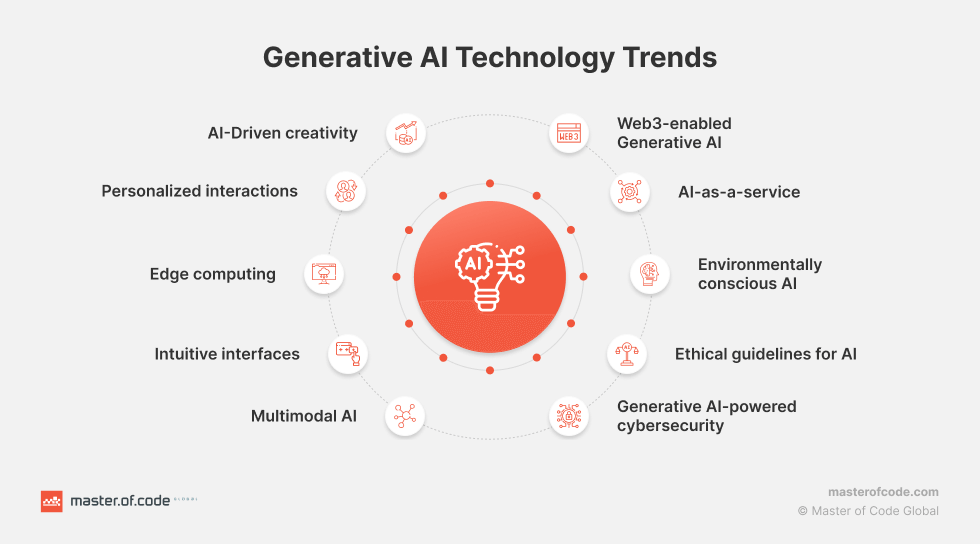
Major Trends Shaping the AI Future
Several interconnected trends are likely to define the next phase of AI development and adoption.
Multimodal AI Becomes Standard
The next generation of AI systems processes text, images, audio, video, and sensor data together rather than in isolation. This enables more natural interactions and richer applications. A medical AI might analyze a patient’s spoken description, medical imaging, and electronic health records simultaneously. A creative tool might generate a video from a script, adjust the visuals based on musical cues, and refine the output through conversational feedback.
Multimodality is not just a technical improvement. It changes what AI can do. Systems that understand multiple forms of input can operate in more complex environments and handle more nuanced tasks than text-only or image-only models.
AI Agents and Autonomous Systems
Perhaps the most discussed frontier is AI agents that can perform multi-step tasks with minimal human intervention. These systems can research topics, make appointments, write and debug code, manage projects, and coordinate with other agents. Unlike current AI assistants that respond to individual prompts, agents pursue goals over time, adapting their approach based on intermediate results.
The implications are profound. An AI agent that can handle a company’s routine customer service, scheduling, and reporting would free human employees for higher-level work. But it also raises questions about oversight, accountability, and the boundaries of autonomous decision-making.
I have experimented with early agent frameworks, and the experience is revealing. When they work, they feel like having a competent intern who never sleeps. When they fail, they can pursue wrong paths with surprising persistence, making errors that compound rather than correct. The technology is improving rapidly, but human supervision remains essential.
Edge AI and On-Device Intelligence
Running AI models directly on smartphones, sensors, and Internet of Things devices rather than in the cloud reduces latency, improves privacy, and lowers bandwidth costs. As chips become more efficient and models become more compact, sophisticated AI capabilities are migrating to the edge.
This trend has significant privacy implications. A voice assistant that processes commands on your phone rather than sending audio to a remote server keeps your conversations local. A health monitor that analyzes biometric data on the device protects sensitive information. Edge AI makes these protections technically feasible at scale.
AI-Human Collaboration Evolution
The relationship between humans and AI is shifting from tool use to genuine collaboration. Early AI was a calculator. You input data, it output results. Modern AI is more like a partner. It suggests, drafts, and recommends, but expects human judgment for final decisions.
The future points toward even deeper collaboration. AI systems that learn your preferences over time, anticipate your needs, and adapt their communication style to match yours. The boundary between human and machine contribution will become increasingly fluid, raising important questions about credit, accountability, and the nature of expertise.
Market and Industry Trends
The business landscape around AI is evolving as rapidly as the technology itself.
Consolidation and Competition
The AI market is simultaneously consolidating and fragmenting. Large technology companies are acquiring promising startups, integrating AI into their existing platforms, and building moats around their ecosystems. At the same time, open-source models and smaller specialized vendors are creating vibrant competition in niches that big players overlook.
This dynamic creates both opportunities and risks for users. Platform consolidation can improve integration and reliability but reduce choice and increase dependency. Fragmentation fosters innovation but creates complexity. Navigating this landscape requires strategic thinking about vendor relationships and data portability.
The Rise of AI-Native Companies
A new generation of companies is being built with AI at their core rather than adding it as a feature. These businesses design their operations, products, and culture around AI capabilities from day one. They often achieve efficiencies and scale that traditional companies struggle to match.
I have consulted with several AI-native startups, and the difference in mindset is striking. They do not ask how AI can improve existing processes. They ask what becomes possible when AI handles tasks that previously required large teams. This rethinking of fundamental assumptions is producing business models that would have been unthinkable a few years ago.
Workforce Transformation
The impact of AI on employment is complex and uneven. Some roles are being automated. Others are being augmented. New roles are emerging in AI management, ethics oversight, and human-machine interaction design. The net effect varies dramatically by industry, geography, and skill level.
The trend that concerns me most is not total job elimination but job polarization. High-skill workers who can leverage AI effectively see their productivity and compensation rise. Low-skill workers in routine roles face displacement without clear paths to new opportunities. Addressing this polarization will require intentional policy, education, and business practice.


Societal and Ethical Trends
Technology does not develop in a vacuum. Social values, ethical concerns, and political pressures shape its trajectory.
Demand for Transparency and Explainability
As AI systems make more consequential decisions, the demand for understanding how those decisions are made grows stronger. Explainable AI is moving from academic research to regulatory requirement. Users, regulators, and affected individuals increasingly expect clear explanations of AI reasoning, especially in high-stakes domains like healthcare, criminal justice, and finance.
AI and Environmental Sustainability
The energy consumption of large AI models has become a significant concern. Training and running these systems requires substantial electricity, much of it generated from fossil fuels. This has sparked interest in more efficient architectures, renewable energy sourcing, and model compression techniques that deliver similar performance with less environmental impact.
The sustainability trend intersects with the edge AI trend. Smaller, more efficient models running on low-power devices consume far less energy than massive cloud-based systems. This alignment of technical and environmental goals may accelerate the shift toward on-device intelligence.
Global AI Governance
The regulation of AI is becoming a significant arena of international competition and cooperation. Different regions are developing distinct approaches. The European Union emphasizes risk-based regulation and fundamental rights. The United States focuses on innovation and national security. China pursues state-directed development with tight control.
These different models will shape the global AI landscape for decades. Companies operating internationally face complex compliance challenges. Countries must balance the benefits of AI leadership against the risks of unregulated development. International cooperation on AI safety, while difficult, is increasingly recognized as essential.
Preparing for the AI Future
Understanding trends is valuable only if it leads to action. Here are practical steps individuals and organizations can take to prepare for the AI future.
For Individuals
Develop AI literacy. You do not need to become a programmer, but you should understand what AI can and cannot do, how to use common tools effectively, and how to evaluate AI-generated information critically.
Cultivate uniquely human skills. As AI handles more routine cognitive tasks, skills like emotional intelligence, creative problem-solving, ethical judgment, and complex communication become more valuable. Invest in developing these capabilities.
Stay adaptable. The specific tools and technologies will change. The ability to learn new systems, adapt to new workflows, and integrate new capabilities will remain essential. Build learning habits that keep you current without consuming your life.
Engage with policy. AI governance affects everyone. Participate in public discussions, support organizations that advocate for responsible AI, and vote for representatives who understand these issues.
For Organizations
Develop an AI strategy. Do not adopt AI reactively. Define how AI fits your mission, values, and competitive position. Identify specific use cases where AI can deliver value and invest in implementation.
Invest in your people. The best AI implementation fails if your team cannot or will not use it. Provide training, involve employees in tool selection, and address concerns about job security openly and honestly.
Build ethical guardrails. Establish clear policies for AI use, data handling, and decision-making accountability. Review these policies regularly as technology and regulations evolve.
Plan for disruption. Scenario planning helps organizations think through how different AI developments might affect their industry, customers, and operations. Prepare for multiple futures rather than betting on a single prediction.
Common Mistakes When Thinking About AI’s Future
Predicting the future is inherently uncertain, but some mistakes are avoidable.
Overestimating Short-Term Change
Hype cycles create expectations that AI will transform everything overnight. In reality, organizational and social change moves more slowly than technological capability. The tools may be ready, but adoption lags due to inertia, regulation, and human factors.
Underestimating Long-Term Impact
Conversely, it is easy to dismiss AI’s transformative potential because immediate changes seem incremental. The internet seemed like a novelty to many in 1995. By 2005, it had restructured entire industries. AI may follow a similar trajectory, with compounding effects that become visible only in retrospect.
Treating AI as Purely Technical
AI is not just a technology story. It is a story about labor markets, power dynamics, cultural values, and institutional adaptation. Focusing only on the technical trends misses the human and social dimensions that ultimately determine how technology affects our lives.
Assuming Universal Impact
AI will affect different people, industries, and countries differently. A prediction that makes sense for software development may be irrelevant for agriculture. A trend that transforms urban knowledge work may barely touch rural manual labor. Avoid one-size-fits-all thinking.
Frequently Asked Questions
Will AI replace most human jobs?
AI will likely transform most jobs rather than eliminate them entirely. Some roles will be automated, particularly those involving routine cognitive and physical tasks. Many more will be augmented, with AI handling portions of the work while humans focus on judgment, creativity, and interpersonal aspects. New roles will emerge in AI development, management, and oversight. The net effect on employment will vary significantly by industry and region.
How quickly will these trends materialize?
Some trends, like multimodal AI and edge computing, are already visible and will mature within two to three years. Others, like fully autonomous AI agents, may take five to ten years to reach reliable deployment. Social and regulatory adaptations typically lag technical capabilities by several years.
Should I learn to code to prepare for the AI future?
Coding is valuable but not essential for everyone. AI literacy, critical thinking, and domain expertise matter at least as much. If you are interested in building AI systems, coding is necessary. If you are interested in using AI effectively in your field, understanding the tools and their implications is more important than writing algorithms.
What is the biggest risk of AI development?
Different observers emphasize different risks. Some focus on existential risks from superintelligent systems. Others emphasize near-term harms from bias, surveillance, and job displacement. Both perspectives have merit. The most immediate risks are likely misuse of current capabilities and inadequate governance of emerging ones.
How can small businesses prepare for AI trends?
Start with practical applications. Identify one or two processes where AI could save time or improve quality. Experiment with affordable tools. Build internal knowledge gradually. Stay informed about developments in your industry. Small, consistent steps are more sustainable than dramatic transformations.
Final Thoughts
The future of artificial intelligence is not predetermined. It will be shaped by the choices of technologists, business leaders, policymakers, and citizens. The trends we have explored point toward a world where AI is more capable, more integrated, and more consequential than it is today. But the specific trajectory depends on decisions made in boardrooms, legislatures, and communities around the world.
What gives me hope is not the technology itself but the growing awareness that we must engage with it thoughtfully. The conversations about AI ethics, governance, and impact are more sophisticated and widespread than they were even two years ago. More people understand that AI is not a force of nature beyond our control but a human creation subject to human direction.
My advice is to stay informed without becoming overwhelmed. Focus on the trends most relevant to your life and work. Take practical steps to prepare without trying to predict every development. Engage with the ethical and policy dimensions without becoming paralyzed by uncertainty.
The AI future is being written now, and informed participation is the best way to ensure it serves human flourishing. The tools are powerful. The questions are profound. The answers are ours to shape.